


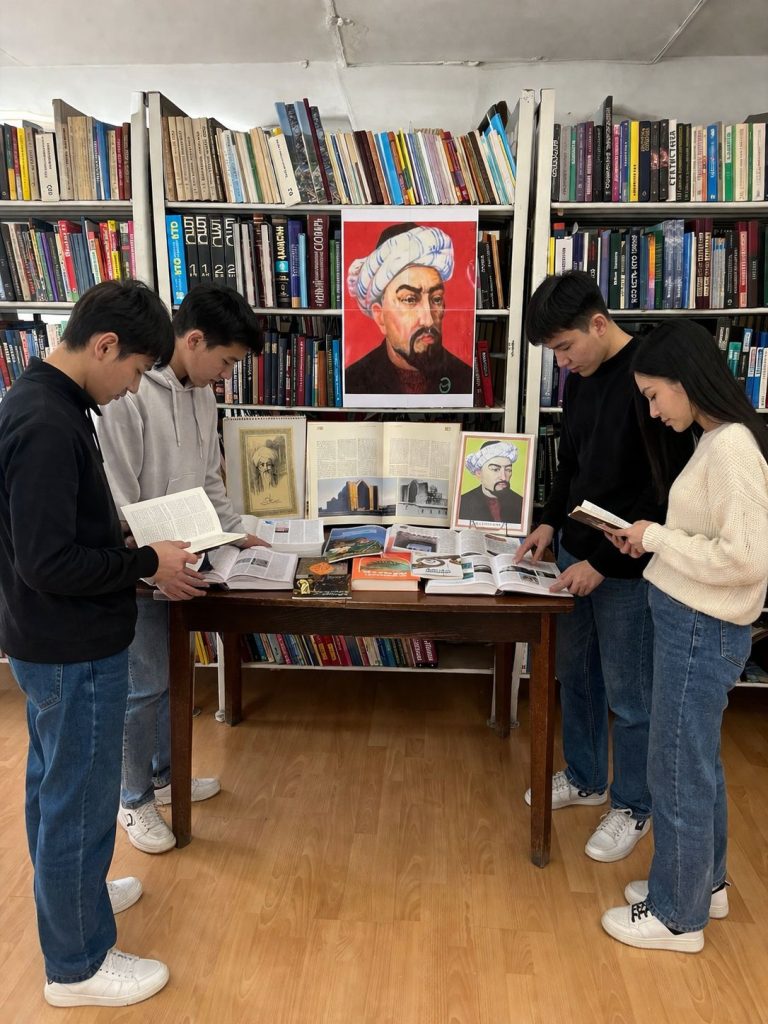
Khoja Ahmed Yasawi is a key figure in the spiritual history of Central Asia. Besides being a poet and philosopher, there are many legends and little-known facts about his life.
The mausoleum, a gift from Tamerlane: 233 years after Yasawi’s death, the great military leader Amir Timur (Tamerlane) ordered a majestic mausoleum to be built at his resting place; today it is a UNESCO World Heritage Site and the spiritual centre of the Turkic world. Life in an underground cell: It is believed that after the age of 63 (the age at which the Prophet Muhammad died), Yasawi withdrew into an underground cell (khilvet) in the city of Yassy (present-day Turkistan). He believed that he had no right to see sunlight longer than the Prophet had seen it, and spent his remaining years in prayer and writing. A link with the Prophet through a date: According to legend, Arystan Bab, Yasawi’s mentor, received from the Prophet Muhammad an amanat, a persimmon stone (or a date), which he was to pass on to his successor. Arystan Bab waited hundreds of years until he met the young Ahmed and passed this symbol of faith on to him, which symbolises direct spiritual succession. He wrote in Turkic, not Arabic: Unlike many scholars and theologians of the time, Yasawi wrote his sermons, “Divan-i Hikmet” (Book of Wisdom), in the accessible Turkic language. This made it possible to spread the ideas of Islam and Sufism among the nomadic tribes, making the faith close and understandable to ordinary people. Founder of an order: He founded the Sufi order “Yasawiyya”, which had a huge influence on the culture and ethics of the whole of Central Asia.
